GLP-1 Medications
What Are Compounded GLP-1s?
Compounded semaglutide and tirzepatide have become a common part of the GLP-1 conversation — but many patients aren't sure what "compounded" actually means, or how it differs from brand-name medications like Ozempic, Wegovy, Mounjaro, and Zepbound. This guide breaks down what compounded GLP-1s are, why they exist, how the rules have changed, how they compare to FDA-approved versions, and what to look for in a program that offers them.
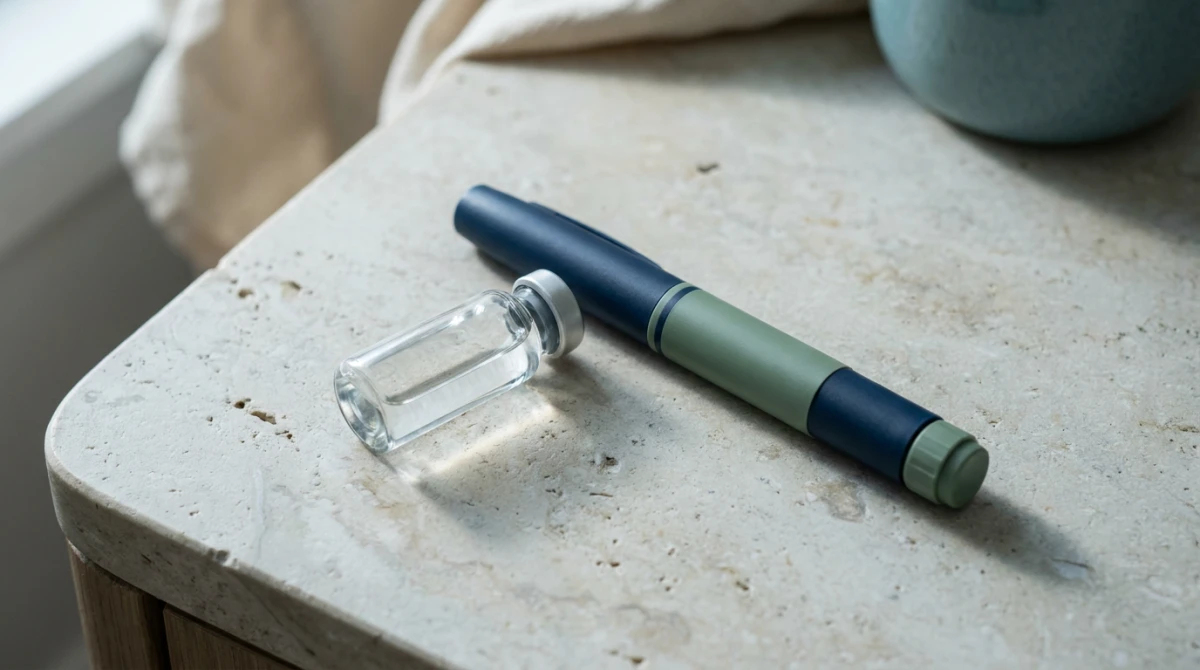
Understanding GLP-1 medications
GLP-1 stands for glucagon-like peptide-1, a hormone the body produces naturally to help regulate appetite, digestion, and blood sugar. GLP-1 receptor agonist medications mimic this hormone, which is why they've become widely used for both diabetes management and medical weight loss.
Between 2022 and 2024, demand for these medications grew faster than manufacturers could supply, and the FDA placed several brand-name GLP-1s on its drug shortage list — which temporarily opened the door for licensed pharmacies to prepare compounded versions. Those shortages have since been resolved, and the rules governing compounded versions have tightened accordingly. Details below.

What does "compounded" mean?
A compounded medication is one that a licensed pharmacy prepares for an individual patient, rather than a mass-manufactured product that comes from the drug maker in a fixed, standardized form. Compounding itself isn't new or inherently risky — pharmacies have compounded medications for decades to meet needs that commercial products can't, such as adjusting a dose strength, changing a delivery form, or substituting an ingredient for a patient with an allergy.
For GLP-1 medications specifically, compounding pharmacies prepare semaglutide or tirzepatide using the same active ingredient found in the brand-name drug, formulated to a provider's prescription. What can differ is the inactive ingredients, concentration, sourcing, and the facility standards under which the medication is prepared — which is why the pharmacy a program works with matters.
Compounded vs. brand-name GLP-1s: a side-by-side look
Compounded
Pharmacy vial, prepared per prescription
Brand-name
Manufacturer box, fixed standardized dose
| Factor | Compounded GLP-1 | Brand-name GLP-1 |
|---|---|---|
| FDA approval status | Not individually FDA-approved; compounded under pharmacy regulations | FDA-approved (e.g., Ozempic, Wegovy, Zepbound, Mounjaro) |
| Formulation | Prepared by a licensed pharmacy to a provider's prescription; may differ in inactive ingredients, concentration, or delivery form | Manufactured to a fixed, standardized formula |
| Testing & oversight | Pharmacy-level quality and sterility standards; not subject to the same large-scale clinical testing as the branded drug | Extensively tested in FDA clinical trials before approval |
| Availability | Legally limited to patient-specific (503A) compounding for a documented medical need; no longer permitted for general shortage-based demand | Widely available following resolution of the 2022–2025 shortages |
| Typical cash cost | Often lower out-of-pocket where legally available, particularly without insurance coverage | Typically higher out-of-pocket without insurance; coverage varies by plan |
| Personalization | Dose and titration schedule can be tailored by the prescribing provider | Fixed dose strengths set by the manufacturer |
| Best suited for | Patients under active physician monitoring with a documented, individual clinical need | Patients who prioritize an FDA-approved formulation and have consistent access |
This comparison is general and educational. Availability, pricing, and suitability depend on individual medical evaluation and current market conditions.
Why compounded GLP-1s exist — and how the rules have changed
Between 2022 and 2024, the FDA placed Ozempic, Wegovy, Mounjaro, and Zepbound on its drug shortage list as patient demand outpaced manufacturer supply. That shortage designation temporarily allowed licensed pharmacies — including large-scale 503B outsourcing facilities — to compound versions of these medications to help fill the gap for patients who couldn't access their prescribed treatment.
That landscape has since shifted. The FDA declared the semaglutide shortage resolved in February 2025, and a federal court subsequently upheld the FDA's authority to end shortage-based compounding, denying an industry group's request to block the decision. In 2026, the FDA proposed excluding semaglutide, tirzepatide, and liraglutide from the substances 503B outsourcing facilities can compound in bulk; the public comment period has closed, and a final determination is pending. See the FDA's compounder policy statement and the FDA's drug shortages page for the latest status.
Today, compounded semaglutide and tirzepatide remain legally available only in narrower circumstances — primarily through 503A pharmacies compounding a patient-specific prescription for a documented individual medical need, rather than as a general lower-cost alternative to the brand-name drug.
When compounding may still be appropriate
A patient has a documented allergy or sensitivity to an inactive ingredient in the FDA-approved product.
A prescribing provider determines a patient needs a dose, strength, or delivery form that isn't commercially available.
A patient-specific clinical reason is documented by the prescribing physician, consistent with Section 503A of the FD&C Act.
Safety considerations
Because compounded medications aren't individually FDA-approved, the quality and consistency of a compounded GLP-1 depends heavily on the pharmacy preparing it. Reputable compounding pharmacies operate under strict sterility, testing, and documentation standards — but oversight varies across the industry, and not every source meets the same bar. That's why the medical relationship matters as much as the medication itself: ongoing physician monitoring, lab work, and dose adjustments are what make a compounded GLP-1 program safe over time, not just the prescription itself.
Common, expected side effects with any GLP-1 — compounded or brand-name — include nausea, vomiting, and digestive changes, especially during dose adjustments. Patients should always work with a licensed provider who monitors their response and can adjust treatment accordingly.
Ingredient sourcing is a related concern: some products marketed online use illegally imported active pharmaceutical ingredients rather than pharmacy-grade material. The FDA's GLP-1 Green List initiative is aimed at helping patients and providers identify legitimate, verified sources and avoid counterfeit or illegally sourced ingredients.

How Praxiom approaches compounded GLP-1 therapy
Praxiom Health is a physician-led, LegitScript-certified telehealth practice. Our compounded GLP-1 programs are prescribed and monitored by our physicians — including board-certified specialists in obesity medicine — with a structured, incremental approach to dosing rather than a one-size-fits-all protocol. Every patient is evaluated individually, followed over time, and adjusted based on tolerability and progress — not just started on a dose and left unmonitored.
Physician-led evaluation before treatment begins
Individualized, incremental dose titration
Ongoing monitoring and follow-up, not a one-time prescription
LegitScript-certified pharmacy partnerships
Transparent, cash-pay pricing with no insurance required
Frequently asked questions

Is a compounded GLP-1 the same medication as Ozempic or Wegovy?
It contains the same active ingredient (semaglutide or tirzepatide), but it is not the identical, FDA-approved product. A licensed compounding pharmacy prepares it individually based on a provider's prescription, which means the inactive ingredients, concentration, and sourcing can differ from the brand-name version.
Are compounded GLP-1s legal?
Compounding is legal within specific limits. Since the FDA declared the semaglutide shortage resolved in February 2025, broad shortage-based compounding of semaglutide and tirzepatide has ended. The FDA has also proposed excluding semaglutide, tirzepatide, and liraglutide from the substances 503B outsourcing facilities can compound in bulk, with a final determination still pending. Compounded versions remain available through 503A pharmacies compounding an individual patient's prescription for a documented clinical reason. Legality also depends on the pharmacy's licensing and compliance, which is why the source of the medication matters.
Are compounded GLP-1s safe?
Safety depends largely on the compounding pharmacy's quality standards and on physician oversight throughout treatment. Working with a licensed, certified telehealth provider that monitors dosing and side effects is the most important safety factor for any patient considering a compounded GLP-1.
Why are compounded GLP-1s less expensive than brand-name versions?
Where compounded medications remain legally available, they generally aren't subject to the same manufacturing, marketing, and patent costs as brand-name drugs, which typically allows for lower cash-pay pricing — an important factor for patients without insurance coverage for weight-loss treatment.
Who is a good candidate for a compounded GLP-1 program?
Patients who are medically appropriate for GLP-1 therapy, understand the differences from brand-name medication, and are willing to stay engaged in ongoing physician follow-up are generally good candidates. A licensed provider determines individual eligibility through a medical evaluation.
Does Praxiom Health prescribe compounded GLP-1 medications?
Yes. Praxiom physicians — including board-certified specialists in obesity medicine — prescribe and monitor compounded semaglutide and tirzepatide as part of an individualized, physician-guided weight-loss program, sourced through LegitScript-certified pharmacy partners.
Wondering if a compounded GLP-1 program is right for you?
A Praxiom physician reviews your history first and explains whether a compounded or brand-name option makes sense for your case — before any prescription or payment.
Check EligibilityConfidential. No obligation. Takes 2–5 minutes.